

Home / About
About
About Peter Moore, LCSW-S
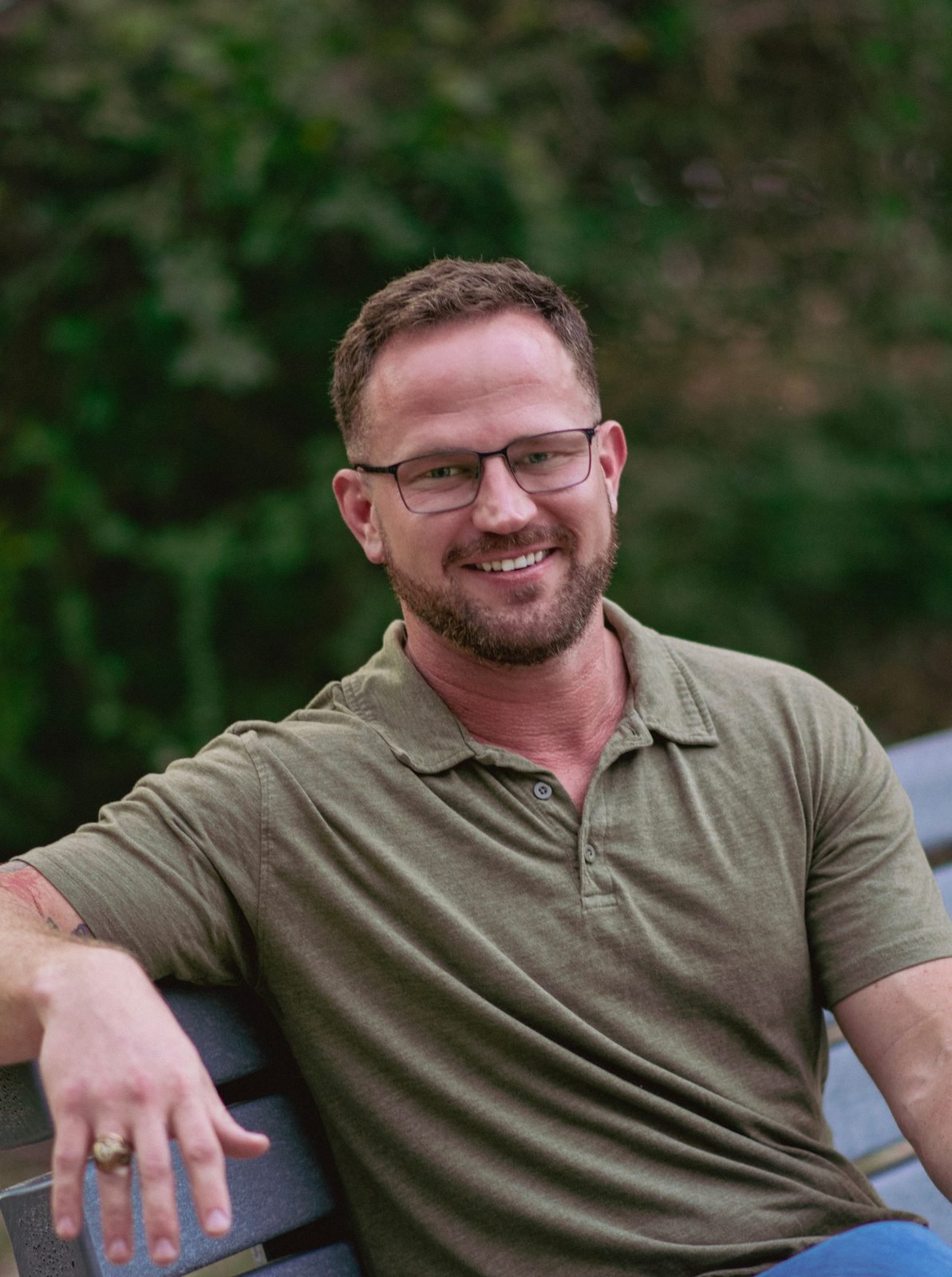
I'm Peter Moore, LCSW-S. I own and operate Panda Therapy, a private practice in The Woodlands, Texas, and I'm a board-approved clinical supervisor.
I work with people going through significant changes in their lives. Becoming a parent, changing careers, questioning long-held beliefs, losing someone, or navigating a relationship that doesn't look the way it used to.
Sometimes there's no obvious event. You're more stressed, irritable, disconnected, or unhappy than you used to be, and you're not entirely sure why.
A lot of my work is with men, particularly those dealing with the pressures of work, family, relationships, and figuring out who they are as life changes. But my practice isn't limited to men. I enjoy working with anyone who wants to better understand themselves and what's going on in their life.
You don't need to have all of that figured out before starting therapy. That's part of what we're here to work through.
My background and experience
Experience that shapes how I work
I've had the opportunity to work with people in a pretty wide range of circumstances throughout my career, and I think that's been one of the most valuable parts of my development as a therapist.
Early in my career, I worked with families through Healthy Start and the City of San Antonio's fatherhood program. Those experiences gave me a better understanding of how family relationships, parenting, stress, and the circumstances we're living in can affect our mental health.
I also worked in the conservatorship unit with Child Protective Services in Texas. That work exposed me to some of the more difficult situations families can face and helped shape how I understand trauma, family dynamics, and the lasting effects of difficult experiences.
My time at Austin Recovery, working in addiction treatment and intensive outpatient services, brought another perspective. I saw how often substance use, mental health, relationships, and the ways people cope with stress are connected. It also reinforced that meaningful change isn't always straightforward, and progress rarely looks exactly the same from one person to another.
Over the years, I've also worked in a private hospital in San Antonio, with the VA in both San Antonio and Houston, and in other group therapy practices before eventually starting my own practice, Panda Therapy.
Working across community programs, child welfare, addiction treatment, hospitals, the VA, and private practice has allowed me to see how differently people respond to difficult circumstances. It's also taught me that there usually isn't one simple explanation for what someone is going through.
People bring their own experiences, relationships, responsibilities, and ways of understanding the world into therapy. I think it's important to take the time to understand those things rather than make assumptions about what someone needs.
That's probably the biggest thing my professional experience has taught me, and it continues to influence how I approach my work today.
How I work
How I approach therapy
I try to keep therapy pretty straightforward. My goal is to provide a comfortable environment where you can talk openly, work through what's going on, and leave with a better understanding of yourself and what you want to do moving forward.
I take my work seriously, but I don't take myself too seriously. Therapy doesn't need to feel like a formal interview. You can swear, make jokes, get frustrated, or talk about things you might not feel comfortable sharing with anyone else. I'm not easily surprised, and you don't need to worry about saying the right thing.
I'm not interested in telling people how to live their lives or assuming I know what's best for them. I think people generally understand more about themselves and their circumstances than they sometimes give themselves credit for. Often, the work is about slowing things down enough to recognize patterns, consider things from a different perspective, and make decisions more intentionally.
That doesn't mean I'm going to sit quietly and nod through every session. I'll ask questions, challenge things when I think it's helpful, and offer practical tools or strategies when they make sense.
I draw from approaches like cognitive behavioral therapy (CBT), acceptance and commitment therapy (ACT), solution-focused therapy, person-centered therapy, and mindfulness, but I don't think therapy needs to feel like following a textbook. Different people need different things, and what works for one person may not work for another.
Ultimately, I want our work together to be useful to you, not just something you show up for every week.
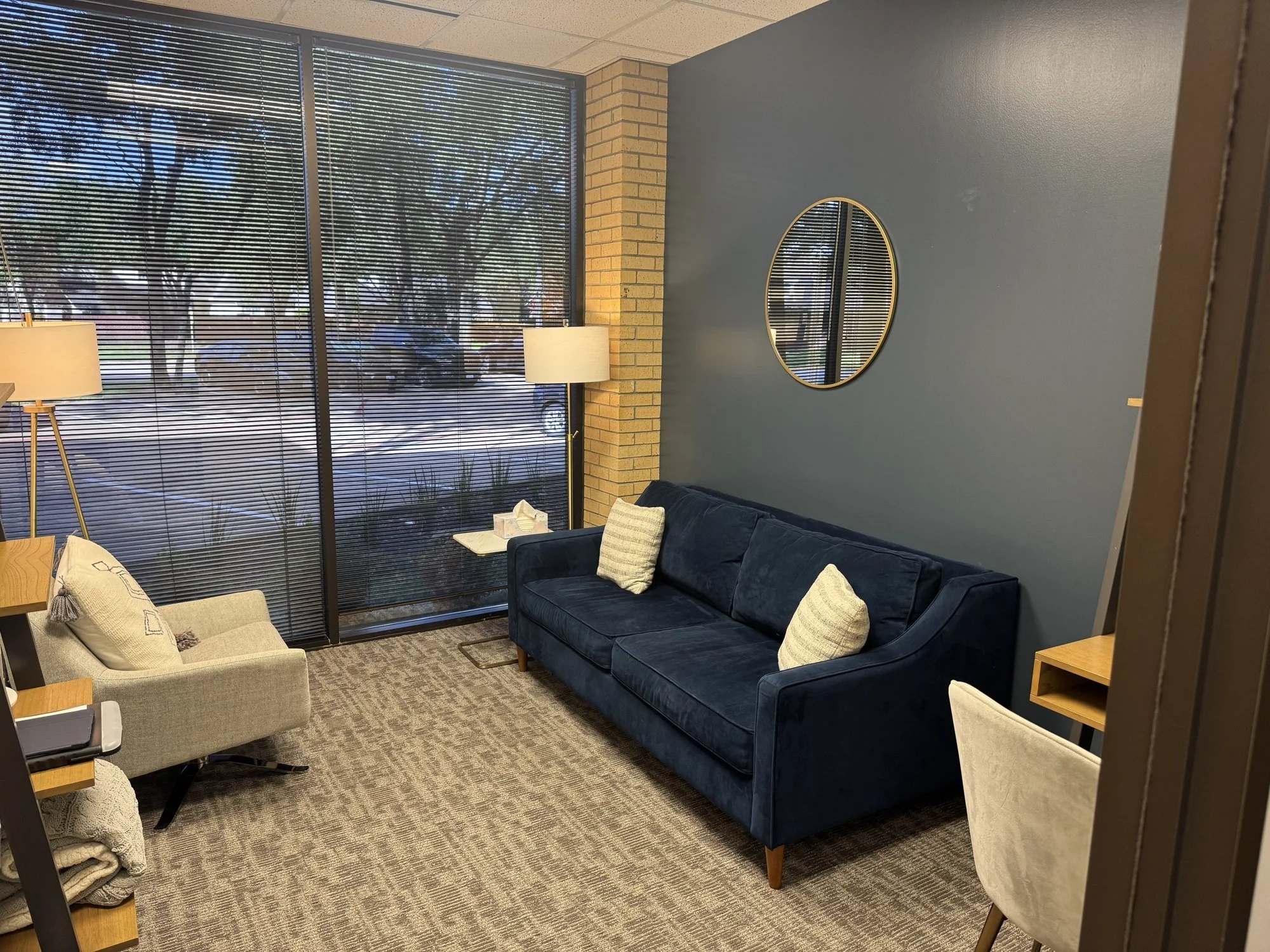
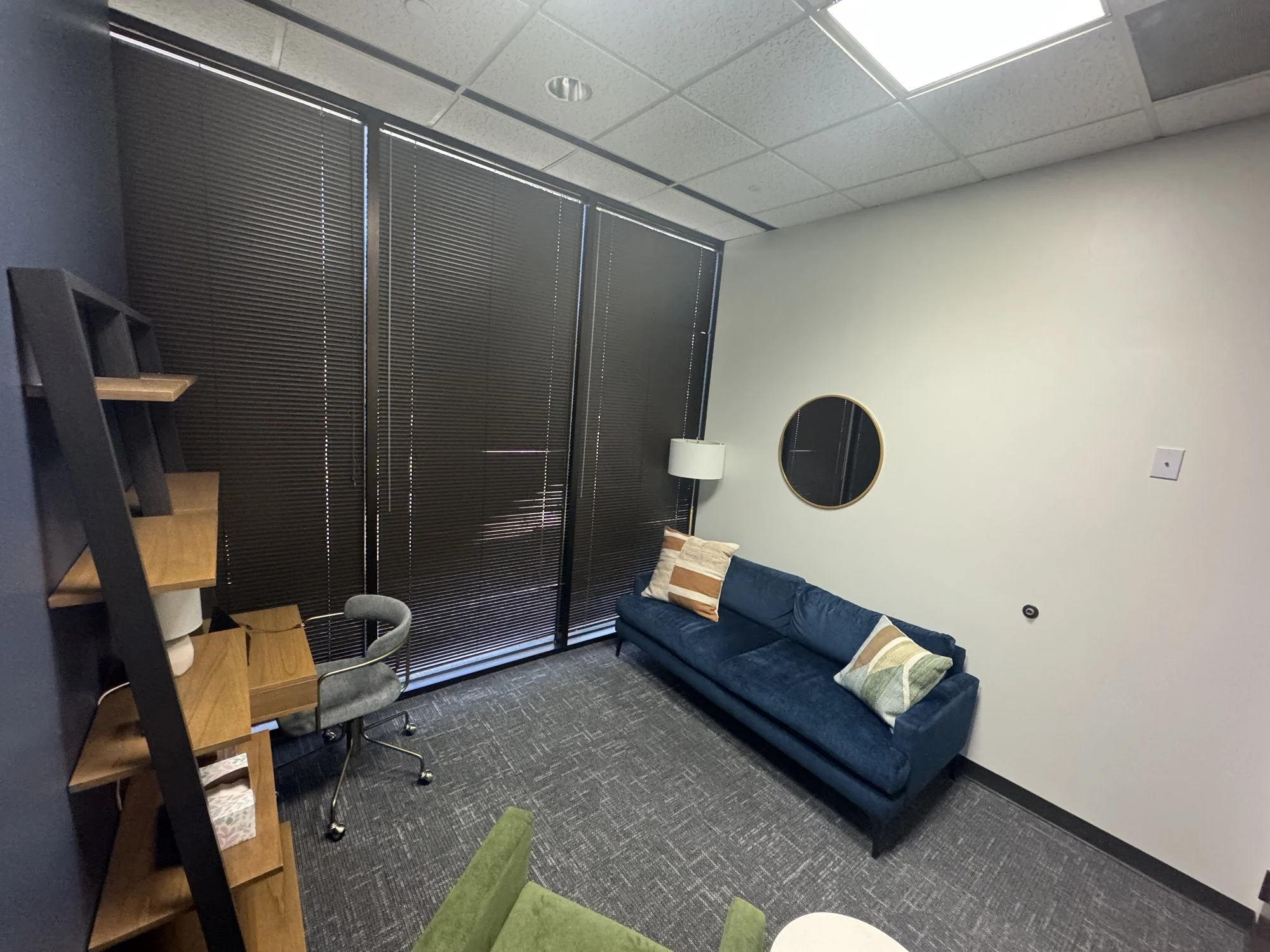
The in-person office. Sessions are available in The Woodlands and Spring, or online anywhere in Texas.
Walk and talk therapy
Walk and talk therapy in The Woodlands
Some people talk more easily side by side than face to face. If an office makes it harder to say the thing, we can meet somewhere you're comfortable and walk during the session instead.
We agree on the location and talk through privacy before we start. It's the same hour and the same work, outdoors.
Available in The Woodlands and Spring after we discuss it.

Why the relationship matters
One therapist, every week, who knows your story.
A lot of therapy today is built for scale. Apps match you with whoever's available and lean on texting. Insurance can limit who you see and how many sessions you get, and it requires a diagnosis to keep paying. Some people do fine with that. Many of the people who come to me tried it first.
What I offer is someone who can gently call you on things when it helps. That kind of relationship takes time, and I'm not interested in rushing it. It's not a quick fix. It's a place to do the work.
Why I enjoy this work
When life changes in ways you didn't plan for
One of the things I've always found interesting is how differently people experience and respond to life, even when their circumstances look similar.
I'm particularly interested in the times when life changes in ways we didn't necessarily plan for. Becoming a parent, navigating a difficult relationship, dealing with an injury, changing careers, or realizing that the life you're living doesn't quite match what you expected.
Those experiences can bring up questions about who we are, what matters to us, and what we want our lives to look like.
I'm particularly drawn to working with men because I think a lot of us have learned to manage stress by pushing through it, staying busy, or keeping things to ourselves. That can work for a while, until it doesn't. As a father of four and a former stay-at-home dad, I've walked the walk so we can talk the talk.
I enjoy helping people work through those questions. Not necessarily by giving them answers, but by helping them better understand what they're experiencing and figure out what makes sense for them.
If you're considering therapy, I'm happy to talk about what you're looking for and whether working together would be a good fit.
Who I work best with
People willing to be uncomfortable for a while.
In order to feel more at peace in their own skin. Odds are, there are things you haven't felt you could talk to anyone about, and I get that. If you want someone to tell you you're fine, I'm probably not your guy.
That said, looking at ourselves honestly takes time. It might mean recognizing patterns we'd rather avoid, questioning things we've believed for a long time, or getting comfortable talking about things we don't usually share. That doesn't have to happen overnight, and I'm not going to push you somewhere you're not ready to go.
Education & credentials
- LCSW-S, Texas License #69584
- Texas board-approved clinical supervisor (LCSW-S), 2026
- Licensed Clinical Social Worker (LCSW) since 2023, LMSW since 2020
- Master of Social Work (MSW), Texas State University, 2020, Advanced Practice Leadership
- Bachelor of Science in Psychology, 2016
- CBT, ACT, mindfulness and other evidence-based approaches
- TherapySpace in The Woodlands and Spring. Online anywhere in Texas. Walk-and-talk available.
My education provided a strong foundation in understanding human behavior, mental health, and the different factors that influence how people experience and respond to life's challenges. Since then, I've continued building on that foundation through clinical practice, professional training, and working with people from a wide range of backgrounds and circumstances.